What to Expect from Paver Installation in San Diego?
What to Expect from Paver Installation in San Diego?
If you are worried about your backyard’s bare patch or driveway’s cracked concrete, you are not alone. Several San Diego homeowners are worried about the same. They all want to do something good with their backyard and driveway, just like you. This is where paving stones, slabs, flagstones, and cobblestones come in. Once you understand what goes into paving stone or paver installation in San Diego, it will be easy for you to modify your outdoor area.
To help you understand what paving blocks, slabs, or stones do to protect your outdoors from the sun and other environmental factors, you need to understand the types, the installation process, and pricing. Keep reading to know these aspects!!
Why San Diego Homeowners are Choosing Pavers?
San Diego experiences sun throughout the year, low humidity, and mild winters. Owing to the constant exposure to the sun, your concrete pathways often fade and crack. Additionally, clay-heavy soil in your front and back yards affects your concrete pathways in both outdoor areas. The soil expands and contracts with changes in moisture, causing concrete slabs to shift and heave over time.
To deal with this, you can install paving blocks, slabs, or stones. They handle all of this better than concrete or asphalt. As these are individual units, they flex naturally with soil movement. If one ever cracks or stains, you can replace it without jackhammering up an entire surface.
Additionally, these elevate the aesthetic appeal of your property because they come in dozens of shapes, textures, and colors. The installation of different styles of pavers makes patios, driveways, and walkways look genuinely custom.
Besides aesthetics, well-installed paving stones, slabs, flagstones, and cobblestones can add measurable value to your property. Outdoor living improvements consistently rank among the highest ROI home upgrades in Southern California, where people spend a significant portion of their lives outside.
Types of Pavers Suited to San Diego Homes
Before you go to your local landscaping vendor for paver installation in San Diego, you should know about the various kinds of paving blocks, slabs, or stones. Let’s have a look!!
Concrete Pavers
These are manufactured to precise dimensions and are built to handle heavy foot traffic and vehicle weight. They are available in multiple colours and finishes. These are widely used for patios in San Diego homes. They are a budget-friendly and reliable choice among Southern California homeowners.
Brick Pavers
They are baked in during manufacturing. These bring a classic warmth that suits traditional and craftsman-style homes. They have natural color, which does not fade, which makes them highly durable.
Natural Stone Pavers
These are made of natural stones such as slate, travertine, and flagstone. Among the three, travertine is a favorite for pool decks because it stays cool underfoot in the heat.
Natural stones are pocket-friendly options, but they require a lot of care. Their installation offers an upscale, timeless look that complements San Diego's Mediterranean-style homes beautifully.
Porcelain Pavers
These are a newer option gaining traction in San Diego. They are non-porous, stain-resistant, and look remarkably similar to natural stone. If low maintenance is your top priority, porcelain is worth considering.
What is the Process of Paver Installation?
A lot of homeowners assume this installation is just laying stones on dirt. In reality, a quality job involves several layers of preparation that directly determine how the final surface holds up over time. Here is what professional installation in San Diego actually looks like:
Site Assessment and Design
Before anything is dug up, a good contractor evaluates the slope of the area, drainage patterns, soil type, and how the space connects to existing structures. At this stage, you finalize the design choices. You can select the pattern, material, edging, and border treatments of your liking.
Excavation
Thereafter, installers excavate to a certain depth. This depth accommodates the base layers plus the paving blocks, slabs, or stones themselves. For patios and walkways, this is usually 6 - 8 inches. Driveways supporting vehicle weight require deeper excavation and a thicker base.
Base Preparation
In this step, contractors lay down a compacted aggregate base and tamp it down in layers. The base is usually made of crushed rock. A poorly compacted base is the leading cause of sinking, shifting, or cracking of paving stones over time.
Therefore, this is arguably the most important step. If you skip this step, then you can run into problems in a few years.
Sand Bedding Layer
Now, the installers spread a thin layer of coarse bedding sand over the base and screeded level. This layer allows for micro-adjustments in height and provides a stable, even surface for the paving blocks, slabs, or stones to rest on.
Laying Down Paving Blocks, Slabs, or Stones
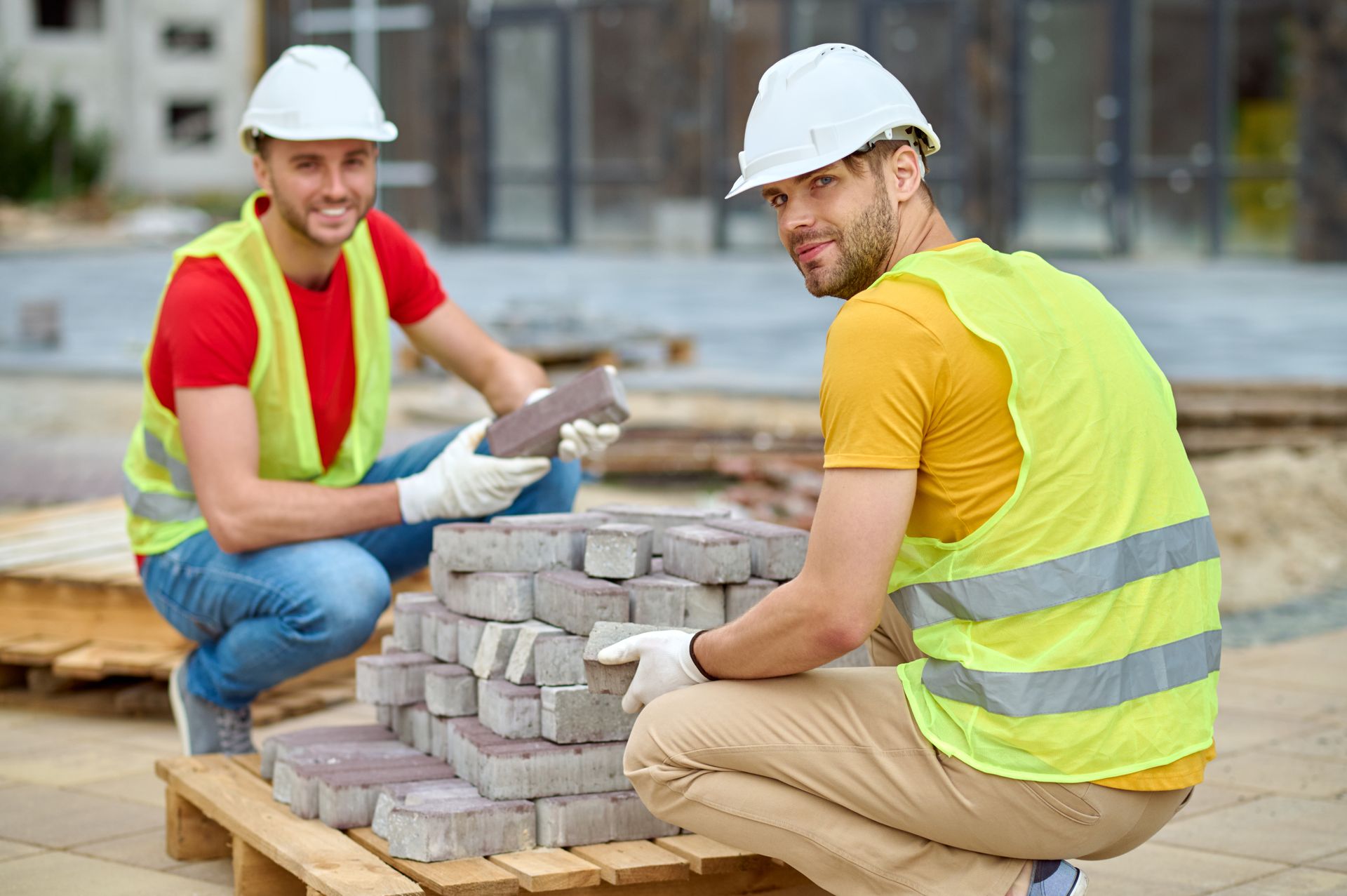
Paving blocks or stones are placed by hand according to the chosen pattern. Professional installers work from a fixed edge and constantly check for level and alignment. Cuts are made at borders using a wet saw.
Compaction and Joint Sand
Once all the paving stones are laid, a plate compactor is run over the surface to seat them firmly into the sand. Polymeric sand is then swept into the joints and activated with water. This hardens and locks the paving blocks, slabs, or stones together while still allowing slight movement. Due to this, your backyard, patio, front yard, and driveway will experience no ant invasion and no weed growth.
Sealing
This step is optional, but recommended. It is done to protect paving materials against staining, fading, and surface erosion. In San Diego's sunny climate, it also helps preserve color over time.
Factors Affecting Paver Installation Cost in San Diego
There is no fixed price attached to the installation process. The cost depends on various factors, which are as follows:
- Type of material chosen for paving blocks, slabs, or stones
- Size of the property to be covered
- Complexity of the installation process, which depends on the condition of the outdoor area to be covered
- Base depth requirement
Common Installation Mistakes to Avoid
Whether you are planning a new patio, a transformed pool deck, or a modified backyard, you must avoid making the following mistakes:
- Skipping or reducing the base layer
- Poor drainage planning
- Using regular sand instead of polymeric sand
- Not accounting for slope
Thus, choosing an experienced local contractor who understands San Diego's specific soil and drainage conditions goes a long way toward avoiding all of these.
How to Choose the Right Contractor for Paver Installation in San Diego?
With so many landscaping and hardscape companies in the area, the decision can feel overwhelming to you. Here is what you should look at while shortlisting the right contractor:
- Licensing and insurance: To begin with, you must go for a contractor holding a valid Contractor's State License Board (CSLB) license, as contractors performing work over USD 500 are required to have this. Check for insurance as well to invest with the right installer.
- A portfolio of local work: You should select a contractor who has installed various kinds of paving blocks, slabs, or stones across San Diego neighborhoods. A local installer understands the soil conditions, drainage challenges, and HOA requirements common to the area.
- Transparent proposal: When going ahead with the installation, you should look at the proposal carefully. The document should mention the depth, materials used, and warranty covers in detail.
- References and reviews: Check for these aspects from recent clients. It will give you a realistic picture of how a company operates day-to-day.
Are You Ready to Transform Your Outdoor Space?
If you are planning to overhaul your patio, driveway, front yard, backyard, or pool deck, LandTech Scenery Inc. is your go-to landscaping contractor in San Diego.
We offer free consultations and custom quotes tailored to your property and budget. Give us a call at 619-343-4201 or contact us online to get started. We would love to show you what's possible in your backyard.