How to Hire a Retaining Wall Installer in Oceanside, CA?
How to Hire a Retaining Wall Installer in Oceanside, CA?
If you have a property that sits on hillsides, slopes, or a graded lot in Oceanside, you know that your property is prone to soil movement. When rain hits this coastal city of California, your property’s sandy or clay-heavy ground experiences soil erosion. To protect your house or commercial space from the impact of rain, you should build a retaining wall.
To build the wall, you must hire a local
retaining wall installer in Oceanside, CA. Before you go online or pick up your phone to book a professional, explore the different options available. Also, let us understand functions of these walls work, the installation process, and questions to ask.
This post has answers to all your questions. Let’s explore!!
Retaining Wall: Types, Functions, Lifespan
It is a structure designed for the outdoor area of your property to hold soil and prevent erosion. Construction of these walls levels uneven land by creating a near-vertical or vertical face between two ground levels.
If you are looking forward to protecting your driveways, backyards, and front yards of your Oceanside homes, you should know about the types, functions, and lifespan of these walls.
Types
You can hire professionals to install or construct any of the following retaining walls in your Oceanside property:
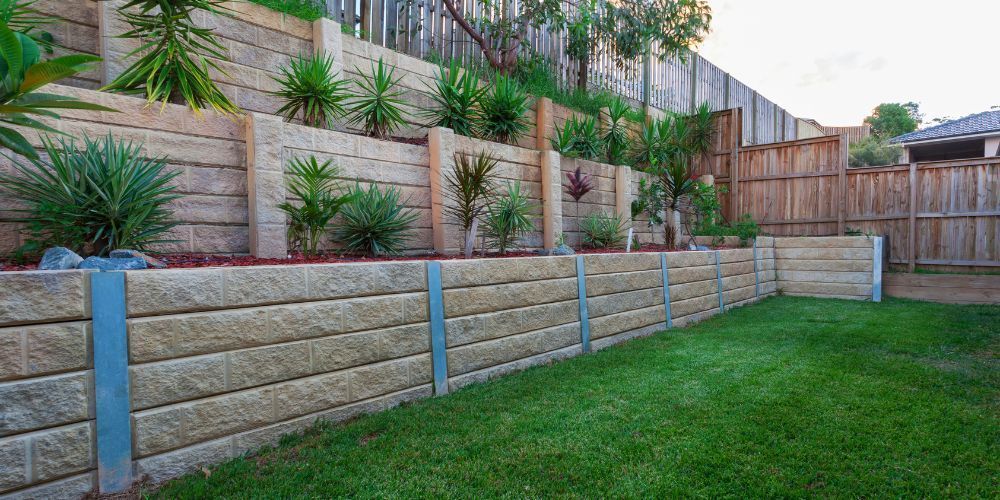
Segmental Block Walls
These walls use interlocking concrete units, which are stacked in courses. They are reinforced with compacted gravel backfill. For tall segmental walls, geogrid layers are laid down. The layers extend into the soil behind the wall.
These walls are commonly used in residential landscaping. This is because they are durable and flexible in design. Additionally, these walls handle curved or terraced layouts effectively. Also, drainage stone placed behind these walls prevents water pressure from building up.
Natural Stone Walls
Such structures use fieldstone, boulders, or cut stone. Usage of these stones helps create a textured and organic appearance. They blend well into native landscaping and work particularly well with drought-tolerant plants.
Walls made of natural stones depend on mass and careful stacking to resist soil pressure. Natural stones are durable if you construct low to moderate-height walls around your Oceanside property.
Poured Concrete Walls
Concrete offers high structural strength and works well for taller walls. Also, walls built with poured concrete are ideal for areas with significant soil load. They offer a smooth and contemporary look as they are created on site and built with reinforcing bar (rebar).
Such structures need a proper drainage plan and footing depth. Owing to these technicalities involved in the construction, it is essential to have an engineering review to build tall concrete walls.
Timber
Walls built with timber are ideal for short walls in low-moisture or dry areas. These are created with pressure-treated lumber.
Timber walls are pocket-friendly options as compared to concrete and stone walls. However, the former has a shorter lifespan in comparison to the latter.
Gabion
Such walls are made of wire mesh cages filled with rock or crushed stone. As these walls are permeable, water moves through them rather than building up behind them. Owing to this, gabions are a practical choice for areas with drainage issues. Also, these are ideal for the surroundings near slopes where hydrostatic pressure is a concern.
Functions
Here are some of the important functions of all the aforementioned walls.
- They stop soil from washing away during rain or irrigation
- Additionally, these walls prevent the hillside ground from shifting or sliding
- Also, they redirect water away from your home's foundation
- Moreover, such walls level off sections of sloped land for patios, gardens, or lawns
- Furthermore, they shield driveways, walkways, and foundations from soil pressure
Lifespan
Here is an estimate of how long your retaining wall would last:
Types of Walls with Lifespan
- Segmental block walls - 25 to 50 years
- Poured concrete walls - 40 to 60 years
- Natural stone walls - 50 years or more
- Gabion walls - 20 to 30 years
- Timber walls - 10 to 20 years
Installation Process
If you understand the installation process of segmental block walls, poured concrete walls, natural stone walls, gabion walls, and timber walls, you will be able to evaluate contractors easily.
Here are the steps involved in the installation process of experts like LandTech Scenery:
- The installer assesses the slope angle, soil type, drainage patterns, and any surcharge loads such as driveways or structures above the wall.
- Thereafter, professional installers determine the material type, drainage plan, and wall height. They also assess if your property needs any geogrid reinforcement.
- In the next step, professionals excavate the base as per the required depth. Depending on the requirement, the base is compacted and leveled.
- Then begins the wall construction. Installers lay out the courses as per the design. They place the drainage stone behind the wall and install geogrid at specified intervals for taller walls.
- Lastly, the area behind and around the wall is graded. Professionals include drainage pipes or weep holes to allow water to escape from behind the wall.
Signs Your Oceanside Property Needs a Retaining Wall
If you see any of the following signs on your Oceanside property, you should hire a professional installer:
- Rampant soil erosion in your driveways, garden beds, or slopes around your property.
- Water pooling near the foundation of your home.
- Visible cracking or settling in existing walls or hardscape structures
- Difficulty in planting, mowing, or using the outdoor space due to a sloped yard
- Destabilizing slope or existing wall due to nearby trees or plants.
- Leaning or bowing retaining walls
How to Book the Best Retaining Wall Installer in Oceanside, CA?
Here are the factors you should assess when evaluating and booking a retaining wall installer in Oceanside, CA:
- The installer must have a valid California contractor license. In this line of work, it is a license number. This number is allocated by the California Contractors State License Board (CSLB).
- You should book an installation company that has experience working with local terrain and soil conditions. Those who are familiar with Oceanside conditions understand how coastal sandy soils and inland clay behave differently and design accordingly.
- Furthermore, you need to trust a contractor who has excellent knowledge of draining system. A good installer always incorporates drainage into the wall design. You should always ask specifically how they handle water management behind the wall.
- Additionally, permit handling is one of the essential things a reliable contractor must know. The installer should know when permits are required and can either handle them directly or guide you through the process.
- Moreover, a detailed quote is a sign of years of work and accountability. You must ensure that the proposal covers materials, permit costs (if any), labor, and drainage components.
- Lastly, you must always assess the portfolio of completed projects of the selected contractor.
Ready to Get Started?
If your Oceanside property has a slope, erosion issues, or an aging wall that needs attention, getting a professional assessment is the right first step.
LandTech Scenery has over 18 years of experience designing and installing segmental block walls, poured concrete walls, natural stone walls, gabion walls, and timber walls across Oceanside and the greater San Diego area.