Types of Retaining Walls and Which One Works Best for Your Landscape
Homeowners often explore retaining walls to manage slopes, support soil, or improve outdoor usability. This overview explains the main types of retaining walls, how each works, and selection factors based on landscape needs.
Gravity Retaining Walls and When a Retaining Wall Installer Recommends Them
Gravity retaining walls rely on their mass to resist soil pressure. They are typically used for short to moderate height applications where adequate base width is available.
- Constructed from stone, masonry, concrete block, or compact modular units
- Require substantial depth and weight for stability
- Often suitable for gardens, boundary edges, or small elevation changes
- Minimal reinforcement ris equired when properly sized
These walls work best when space allows for a wide base and when loads are predictable. Taller installations may require engineering input or geogrid reinforcement.
Segmental Block Retaining Walls for Versatility
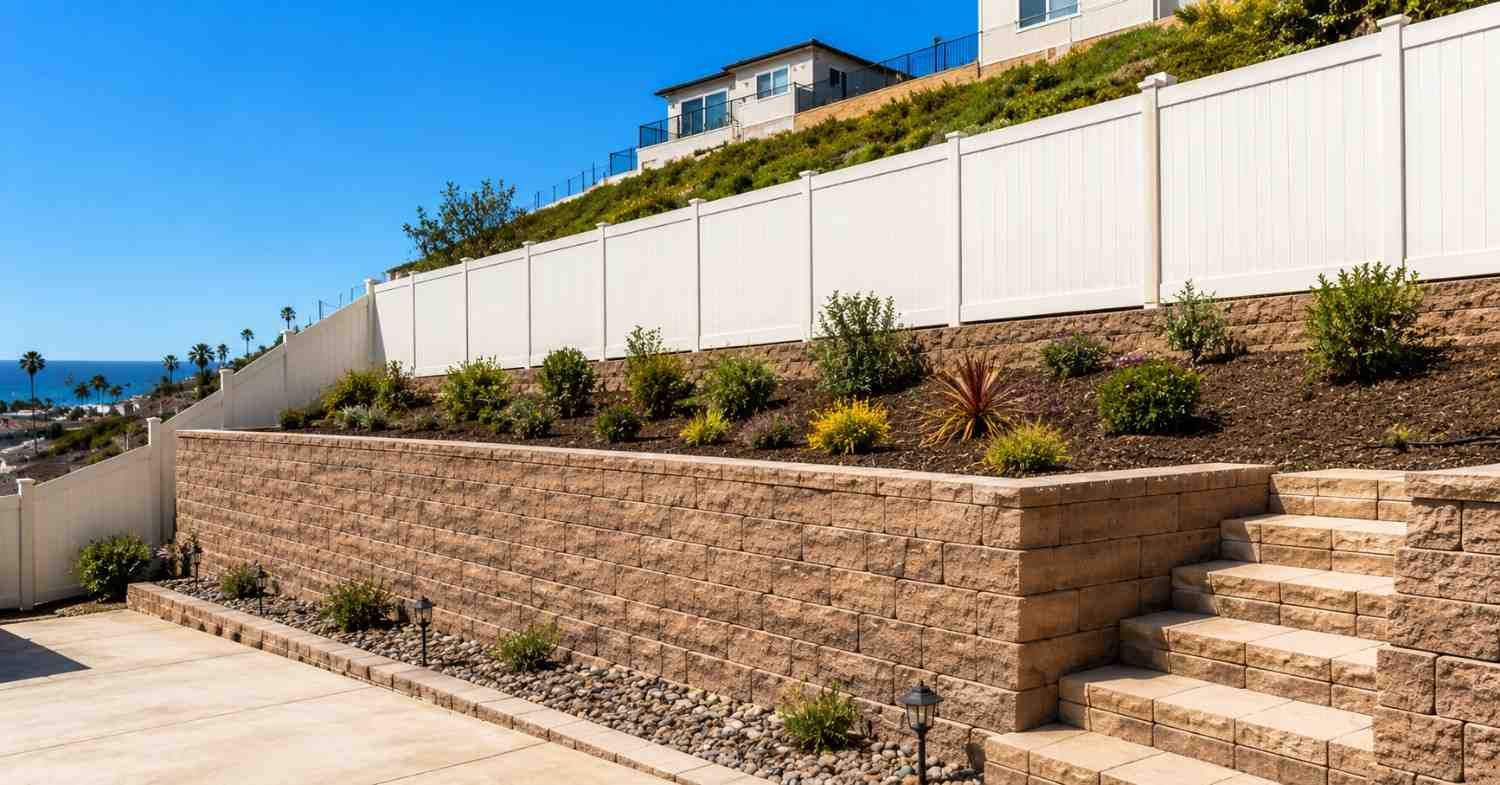
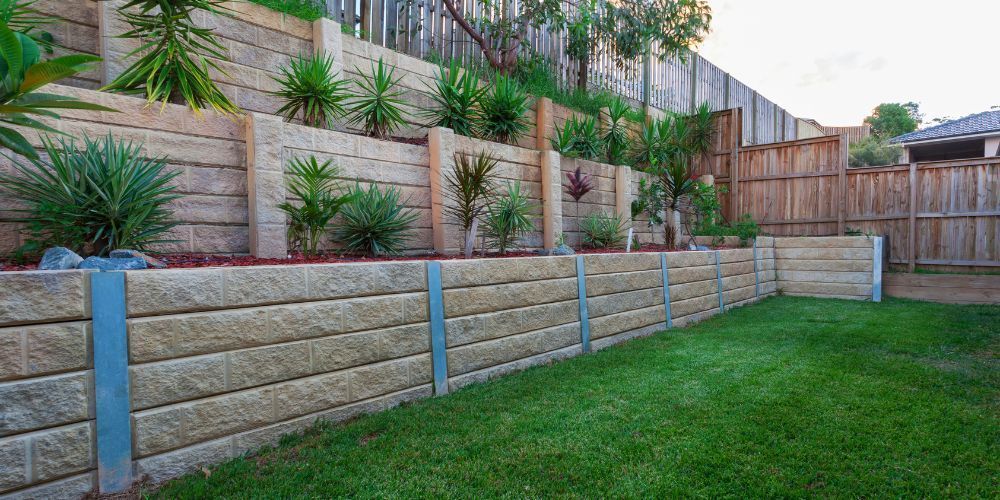
Segmental block walls use interlocking manufactured units combined with gravel backfill and, when necessary, geogrid layers. They are widely used for residential landscapes because they balance aesthetics, durability, and installation efficiency.
- Modular construction supports curved, straight, or terraced layouts
- Manufactured blocks improve uniformity and alignment
- Drainage stone and geogrid help manage back pressure
- Suitable for driveways, patios, stepped yards, and raised gardens
These walls perform well where homeowners want a flexible visual outcome without specialized masonry requirements.
Cantilever Retaining Walls for Higher Loads
Cantilever walls use a structural footing that transfers soil pressure to a slab below grade. Their design enables support for greater heights than typical gravity systems.
- Commonly built with reinforced concrete
- Use a vertical stem connected to a structural base
- Reduce material volume compared to heavy gravity walls
- Require proper engineering and subgrade preparation
Cantilever systems are appropriate when space is limited, and a slim structural profile is preferred, but they require higher technical oversight and precise footing placement.
Sheet Pile Retaining Walls in Limited Space
Sheet pile walls involve thin steel, vinyl, or composite sheets driven vertically into the ground. They hold soil through friction and embedment rather than weight.
- Effective in soft soils or sites with restricted working room
- Suitable near shorelines, canals, or erosion zones
- Lateral stability increases with deeper driven sections
- Materials resist moisture and water-driven decay
These installations are more common in waterfront conditions than residential yards, but remain an option for narrow work areas.
Anchored Retaining Walls for Additional Support
Anchored walls stabilize soil by securing cables or rods into deep ground anchors. This reinforcement supplements other wall types when loads exceed surface support.
- Reduces overturning forces on tall or narrow structures
- Useful where soil strength varies, or surcharge exists
- Requires drilling and tensioning systems
- Supports excavation, roadway, or steep grade work
Anchored designs are generally engineering-driven and selected for performance rather than visual preference.
Gabion Retaining Walls for Drainage and Erosion Control
Gabion walls consist of steel wire cages filled with rock. Their permeable mass allows water to escape instead of building up behind the structure.
- Adapt well to poor drainage conditions
- Install quickly and conform to irregular terrain
- Rely on mass and interlocked baskets for stability
- Common near slopes, drainage channels, and erosion zones
Gabions function best where hydraulic pressure is unacceptable and a natural appearance is suitable.
Timber Retaining Walls for Short-Term Use
Timber walls rely on treated lumber to resist pressure. They remain an accessible option for low structures but have a limited lifespan compared with masonry or concrete.
- Use posts, lag bolts, deadman anchors, and backfill
- Works best for low heights and dry soil
- Have predictable maintenance requirements
- Susceptible to long-term decay
Timber is an economical approach for small projects, but rarely selected for long-term structural containment.
Choosing the Best Type for Your Landscape
Selection depends on height, load, drainage, available space, and long-term expectations. A professional review ensures correct wall sizing, reinforcement, and subgrade preparation.
- Identify soil type and compaction capability
- Confirm groundwater movement and drainage needs
- Determine surcharge loads from vehicles or slopes
- Assess available horizontal space for base width
Homeowners benefit from realistic expectations regarding performance, lifespan, and structural requirements rather than appearance alone.
Frequently Asked Questions
What is the simplest type of retaining wall for small yards?
Gravity walls are typically the simplest because they rely on mass and minimal reinforcement.
How tall can a DIY retaining wall be?
Most jurisdictions allow low walls without permits, but anything beyond a moderate height often requires engineering review.
Do all retaining walls need drainage?
Yes. Drainage stone and outlets reduce hydrostatic pressure and prevent structural stress.
Are concrete walls stronger than block walls?
Reinforced concrete supports higher loads, but segmental blocks can handle many residential applications when designed correctly.
Can retaining walls fail from water pressure?
Yes. Inadequate drainage is a leading cause of bowing, cracking, or displacement.
What type works best near water?
Gabions or sheet piles are commonly used because they accommodate hydraulic movement.
Is timber recommended for long-term use?
Timber is functional for low heights but degrades faster than masonry or concrete.
Do retaining walls increase usable space?
Yes. They help level grades, reduce erosion, and create functional areas.
Final Thought
Each wall type serves a specific purpose based on technical requirements rather than appearance alone. Evaluating soil, height, water flow, and load conditions helps identify a suitable option, and professional review improves long-term outcomes.